
Home Blog

Bali Trip Cost: What a Week Actually Costs in 2026

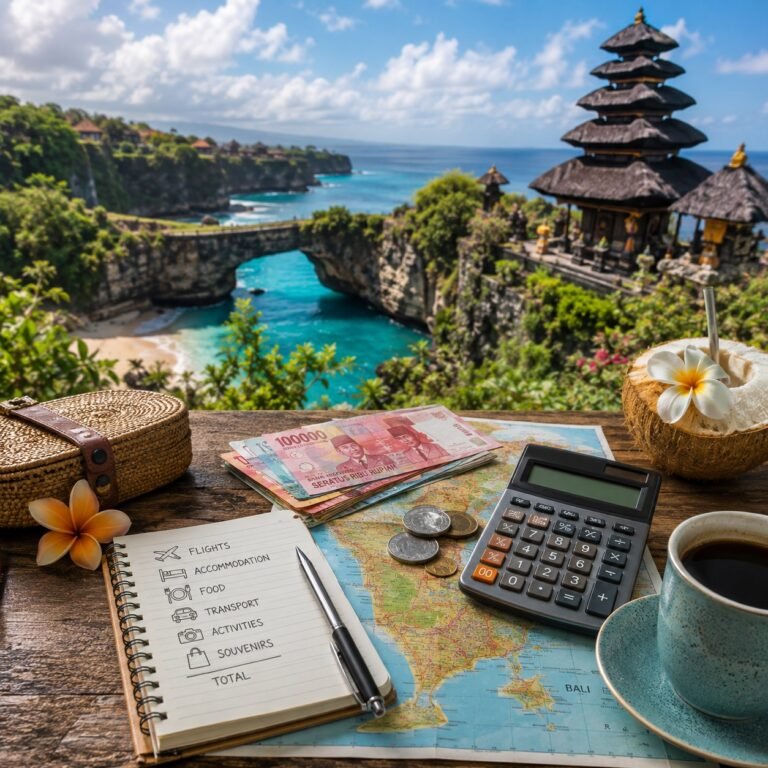
Bali trip cost is the question everyone asks and almost nobody answers with real numbers. You get told it is cheap, which is true, and then you land and discover that a coffee costs the same as it does at home while your villa costs a third of what it would in Europe. Both things are true at once, and that is what makes budgeting for this island confusing.

So here is an actual bali trip cost breakdown for 2026, line by line, in rupiah and dollars, for a week. I have included the charges that never appear in other budget guides: the restaurant service tax, ATM fees, the tourist levy and the card trick at the payment terminal that quietly costs people 4 or 5 percent of everything they spend.

One note before the numbers. The rupiah moved a lot through 2025 and 2026, and depending on the week you look, a US dollar buys somewhere between about 15,500 and 17,000 rupiah. I have used 16,000 throughout, which is a fair middle. Check the live rate before you convert anything.

Bali trip cost at a glance

StylePer person, per dayPer person, 7 daysWhat that gets you
Backpacker$25 to $40$350 to $550Hostel or simple guesthouse, warung food, scooter, few paid activities
Mid-range$70 to $150$700 to $1,400Private villa or boutique hotel, cafe and warung mix, driver days, two or three big activities
Comfortable$150 to $300$1,400 to $2,800Design hotels, restaurants, private drivers throughout, spa, beach clubs
Luxury$300 and up$2,500 and upClifftop suites, fine dining, private guides, no compromises

Land costs only. International flights are extra and are the single biggest variable.

In short: most first-time visitors land in the mid-range band, which puts the bali trip cost at around $90 to $120 a day each. That is a private villa with a pool, decent food, a driver a few days, and the big-ticket experiences, without watching every rupiah.

Bali trip cost for a week: a real line-by-line budget

This is the bali trip cost for a mid-range couple, seven nights, split between Ubud and the south coast. Everything shared where it makes sense, because that is how couples actually travel and it changes the maths considerably.

ItemCost for twoNotes
Villa, 7 nights at $70$490Private pool, Pererenan or Penestanan, low season
Food and drinks, 7 days$420Warung lunches, cafe breakfasts, one good dinner every other night
Private driver, 3 days$135600,000 to 750,000 IDR per day for the car
Scooter hire, 4 days$28One bike, 100,000 IDR a day
Grab and taxis$40Evenings and short hops
Airport transfers, return$30Cheaper pre-booked than at the arrivals desk
Nusa Penida day trip$140Boat, driver, fees, lunch for two
Mount Batur sunrise trek$80Group trek including pickup and permit
Cooking class$60Half day, market visit included
Temple entries, parking, misc$40Uluwatu, Tirta Empul, Tegallalang and similar
Two massages each$50Local spa, not the resort
Visa on arrival, two people$62500,000 IDR each
Tourist levy, two people$19150,000 IDR each, paid before you fly
eSIM, two people$2010 to 20 GB each for the week
Travel insurance$80Check it covers scooter riding, most policies do not
Buffer for the unplanned$120Beach club, extra taxi, a bad day, souvenirs
Total on the groundabout $1,814Roughly $907 each, before flights

Mid-range couple, 7 nights, 2026 prices at approximately 16,000 IDR to the US dollar.

Swap the villa for a $35 guesthouse, drop the driver days, skip Nusa Penida and eat mostly at warungs, and the same week comes in around $800 for two. Go the other way with a $250 clifftop room and dinner out every night, and you are past $4,000 without doing anything extravagant. The cost of trip to Bali is set almost entirely by where you sleep and how often you eat somewhere with a sea view.

Flights, the biggest variable in any bali trip cost

Flights are the one part of the bali trip cost you cannot estimate from a table. Return fares to Denpasar in 2026 run roughly $400 to $700 from Australia, $250 to $450 from Singapore, Kuala Lumpur or India, and $900 to $1,600 from Europe or North America. That range is wider than your entire land budget, so it is worth some effort.

The cheapest months to fly are February, March and October. The most expensive are July, August and the fortnight either side of New Year, when fares from Australia routinely double. Flying midweek and avoiding school holiday windows moves the price more than any booking trick. My month-by-month guide lines up the fare seasons with the weather.

Accommodation, where your bali budget mostly goes

  • Hostel dorm: 100,000 to 200,000 IDR, about $6 to $13.
  • Simple guesthouse room: 250,000 to 500,000 IDR, about $16 to $31.
  • Private villa with a small pool: 600,000 to 1,400,000 IDR, about $38 to $88.
  • Boutique hotel in Canggu or Seminyak: $80 to $180.
  • Clifftop or river-valley luxury: $250 to $700 and beyond.

Two things move these bali prices. Season is the obvious one: July, August and Christmas run 40 to 60 percent above low season for identical rooms. The less obvious one is the booking channel. The same villa often differs by 15 to 20 percent between platforms, and small family-run places will usually beat any online rate if you message them directly for a stay of a week or more. My area guide and hotel shortlist break this down by neighbourhood.

Food and drink, where bali prices surprise people

  • Warung meal: 25,000 to 60,000 IDR, roughly $1.50 to $4. Nasi campur, mie goreng, the food locals actually eat.
  • Cafe breakfast in Canggu or Ubud: 80,000 to 180,000 IDR, $5 to $11. This is where budgets quietly die.
  • Mid-range dinner: 150,000 to 300,000 IDR a head, $9 to $19.
  • Proper restaurant or beachfront seafood: 400,000 to 1,200,000 IDR, $25 to $75.
  • Large Bintang: 35,000 to 60,000 IDR. A cocktail: 120,000 to 250,000 IDR.

Alcohol is the outlier in bali prices because of import duty. A dinner for two can cost less than the two cocktails you had before it. If you are trying to control spending without eating badly, the trick is warung lunches and one good dinner every second night rather than cutting portions or quality.

Transport, and what it adds to your bali daily budget

  • Scooter hire: 70,000 to 150,000 IDR a day, cheaper by the week. Petrol is a few thousand rupiah a litre.
  • Private driver for a full day: 600,000 to 900,000 IDR for the car and driver, not per person. Better value than tours for two or more.
  • Grab or Gojek: 20,000 to 80,000 IDR for most short trips. Restricted near some taxi ranks.
  • Airport transfer to Canggu or Ubud: 250,000 to 450,000 IDR pre-booked.
  • Fast boat to Nusa Penida or the Gilis: 300,000 to 800,000 IDR return.

The scooter is the cheapest option by a wide margin and also the one that lands people in hospital. Check your insurance covers it, carry the correct licence, and see my guide to getting around Bali before deciding.

Activities and entrance fees: bali prices for the big ones

  • Temple entry: 30,000 to 100,000 IDR, usually including sarong hire.
  • Kecak dance ticket: around 150,000 IDR.
  • Mount Batur sunrise trek: $30 to $45 for a group trek.
  • Nusa Penida day trip: $55 to $95 packaged, less if arranged independently.
  • Cooking class: 350,000 to 600,000 IDR.
  • Surf lesson, two hours: 350,000 to 500,000 IDR.
  • Balinese massage at a local spa: 100,000 to 200,000 IDR an hour.
  • Beach club minimum spend: 300,000 to over 1,000,000 IDR.

Budget $250 to $400 per person for a week of activities if you want to do the big ones properly, and treat that as a separate line in your bali budget rather than something absorbed by the bali daily budget. My guide to the best things to do in Bali has the full price list and flags which are free.

The hidden costs missing from most bali budget guides

This is the section that separates a realistic bali daily budget from an optimistic one.

  • Restaurant tax and service, 10 to 21 percent. Added at the till in most sit-down places, often shown as a tiny line at the bottom of the menu. Assume 15 percent on every restaurant bill.
  • ATM withdrawal fees, around 50,000 IDR per transaction. Withdraw the maximum each time rather than small amounts. BCA and Mandiri machines are the most reliable.
  • Dynamic currency conversion. When a card terminal offers to charge you in your home currency instead of rupiah, that convenience costs 4 to 7 percent. Always choose rupiah. Always.
  • Visa on arrival, around 500,000 IDR. Payable per person, covered in my visa guide.
  • Tourist levy, 150,000 IDR per person. Pay it in advance on the official portal at lovebali.baliprov.go.id, and check the address ends in .go.id, because the fake sites charge double.
  • Travel insurance. $40 to $80 a week, and most standard policies exclude scooter accidents unless you hold the right licence.
  • Parking and donations. A few thousand rupiah here and there that adds up to a surprising amount over a week.

Add 15 percent to whatever bali trip cost you first calculate. That is roughly what these extras come to in practice, and it is the difference between a budget that holds and one that quietly fails on day four.

How to cut your bali budget without ruining the trip

  • Travel in May, June, September or October. Dry season weather at 40 percent below peak rates, and the fastest way to cut the cost of trip to Bali. The single biggest saving available.
  • Message small guesthouses directly for stays over a week. Most beat the online price rather than pay commission.
  • Share a driver instead of booking per-person tours. For two or more people this is cheaper every time.
  • Eat one warung meal a day. Not every meal. One. It is 80 percent cheaper than the cafe next door and frequently better.
  • Use a card with no foreign transaction fee and always pay in rupiah. Between DCC and bad exchange rates, this alone can be worth 5 percent of your entire spend. More on this in my guide to managing money in Bali.
  • Buy an eSIM before you land rather than roaming. Roughly $10 versus a phone bill you will not enjoy. See my eSIM comparison.
  • Skip the airport money changers. Withdraw from a bank ATM in the arrivals hall instead.

Bali prices compared to the rest of Southeast Asia

Bali prices are no longer the cheapest in the region. Vietnam and much of Thailand outside the islands are meaningfully cheaper for food and transport. What Bali gives you for the money is a private villa with a pool at a price that buys a hotel room elsewhere, plus a driver for the day that costs less than two airport taxis at home.

Against Australia, the Gulf, Europe or North America, it remains outstanding value. Against its neighbours, it is mid-table and rising. Both of those can be true, and which one matters depends on where you are flying from.

The realistic bali trip cost for a first visit, then: around $900 per person for a week on the ground at a comfortable mid-range level, roughly $450 if you are careful, and no ceiling at all at the top end. Add flights, add 15 percent for the things nobody lists, and you will land within a few percent of what you actually spend. If you are still planning, my Bali travel guide for first-time visitors covers everything around the money.

Frequently asked questions

How much money do I need for 7 days in Bali?

The bali trip cost for a week is around $350 to $550 per person for a backpacker, $700 to $1,400 mid-range, and $2,500 or more for luxury, all excluding international flights. A mid-range couple sharing a villa typically spends about $1,800 on the ground for seven nights.

What is a realistic bali daily budget?

A realistic bali daily budget is $25 to $40 if you are backpacking, $70 to $150 mid-range, and $300 upwards for luxury. Most first-time visitors land around $90 to $120 a day each once accommodation, food, transport and one activity are counted.

Is Bali still cheap in 2026?

Cheap compared to Australia, Europe or North America, yes. Bali prices have risen, but not evenly. Cheap compared to Vietnam or mainland Thailand, no longer. The value is in accommodation and private transport rather than in food and drink, where tourist-area prices have caught up.

How much is a meal in Bali?

A warung meal is 25,000 to 60,000 rupiah, about $1.50 to $4. A cafe breakfast is $5 to $11, a mid-range dinner $9 to $19 a head, and a proper restaurant $25 to $75. Remember that 10 to 21 percent tax and service is added at most sit-down places.

How much cash should I bring to Bali?

Not much. Withdraw rupiah from bank ATMs as you go, taking the maximum each time because fees run around 50,000 rupiah per withdrawal. Carry 1,000,000 to 2,000,000 rupiah at any one time for warungs, parking and entrance fees, which are all cash.

What hidden costs should I budget for?

The costs missing from most bali budget guides are restaurant tax and service of 10 to 21 percent, ATM fees, the 150,000 rupiah tourist levy, the visa on arrival at around 500,000 rupiah, travel insurance, and dynamic currency conversion at card terminals. Adding 15 percent to your first estimate covers all of it.

What is the cheapest time to visit Bali?

Mid-January to early March is cheapest overall, though it is the wet season. For the best combination of price and weather, late April to mid-June and mid-September to mid-October give you dry conditions at close to low season rates.
Mount Batur Sunrise Trek: Prices, Tours and Is It Worth It

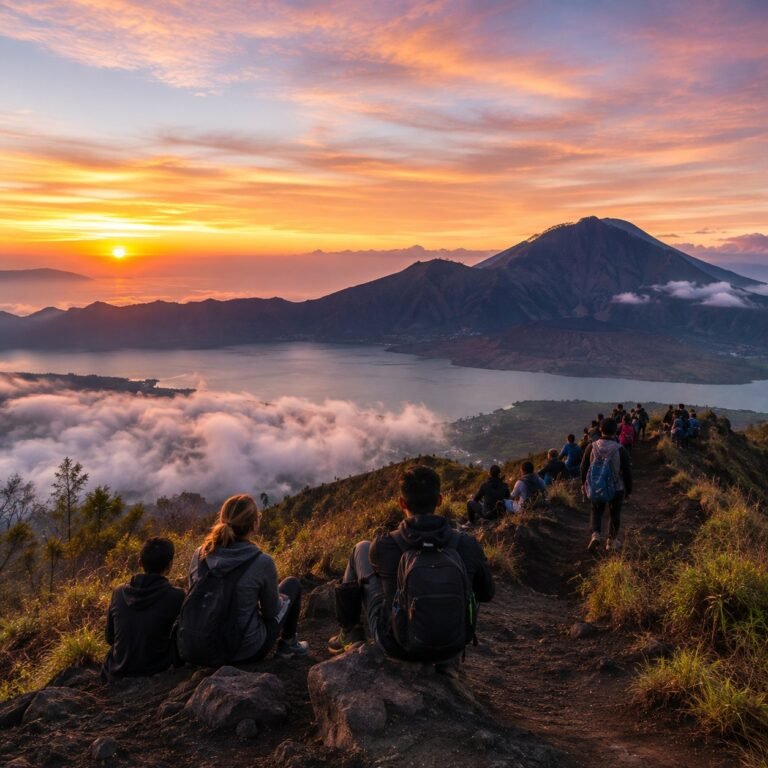
The Mount Batur sunrise trek involves a 2am pickup, two hours of walking uphill in the dark on loose volcanic gravel, and a summit that is genuinely cold. Somewhere in the middle of that, the sky behind Mount Agung turns orange and around 200 other people go quiet at the same moment. That is the trade, and whether it is worth it depends almost entirely on what you expect.

I want to be straight about the parts the tour listings leave out: the crowds, the mandatory guide system, the descent that causes most of the injuries, and the add-ons that are not worth paying for. Here is what it costs in 2026, what actually happens hour by hour, and who should book the jeep instead.

Is the Mount Batur sunrise trek worth it?

In short: yes, if you are reasonably fit and you understand you will be sharing the summit with a few hundred people. No, if you were picturing a solitary mountaintop or if the idea of a 1.30am alarm on holiday makes you wince.

What makes it worth doing is not really the sunrise itself, which you can see from a beach. It is the caldera. Batur sits inside two concentric calderas with a seven kilometre crescent lake below, and as the light arrives you can see the whole structure at once, with Agung to the east and, on a clear morning, Rinjani on Lombok. The volcano itself is only 1,717 metres, but it is a UNESCO Global Geopark for good geological reasons.

Mount Batur sunrise trek prices in 2026

OptionPriceWhat is included
Group trek, basic$30 to $45Hotel pickup, HPPGB guide, permit, headlamp, summit breakfast
Group trek with extras$55 to $92The above plus hot springs, coffee plantation stop, sometimes a waterfall
Private trek$70 to $110 per personYour own guide and pace, flexible timing
Guide only, arranged at the base300,000 to 600,000 IDR per groupGuide alone. You arrange your own transport
Entrance and trekking permit100,000 IDRUsually bundled into any tour price
4WD jeep sunrise tour600,000 to 1,200,000 IDR per vehicleNo hiking. Driven to a viewpoint and across the lava fields
Private driver from Ubudaround 400,000 IDR returnIncludes waiting time during the trek
Guide tip50,000 to 100,000 IDRCustomary, not included, bring small notes

Indicative 2026 prices. Hotel concierge bookings typically run 20 to 30 percent above online rates.

The honest read on the batur tour price: the $30 to $45 group trek gives you everything that matters. The premium packages add a hot spring you could pay for separately for around 200,000 rupiah and a coffee plantation stop that is a sales floor. Pay the extra only if you want a private guide.

What the Mount Batur hike is actually like

  • 1.30am to 2.30am. Pickup. From Kuta, Seminyak or Canggu expect the earlier end and a two to three hour drive. From Ubud it is closer to 2.15am and about 45 minutes on the road.
  • 3.30am. Arrive at the trailhead near Toya Bungkah. Headlamps handed out, guides sorted, a queue of head torches already visible going up the mountain.
  • 3.45am to 5.45am. The walk. Around 400 metres of ascent over roughly two hours. The first hour is a gentle farm track. The last 40 minutes is steep, loose and slow.
  • 5.45am. Crater rim. It is 10 to 15 degrees up there and windy. Guides cook eggs and bananas in the volcanic steam vents while you wait.
  • 6.15am. Sunrise over Agung and the caldera. Fifteen genuinely good minutes.
  • 6.45am to 8.15am. The descent, which is where the difficulty actually is. Volcanic gravel behaves like ball bearings on a slope.
  • 10am to 11am. Back at your hotel, or at the hot springs if your package includes them.

Watch the macaques at the rim. They are used to people, they are quick, and they will go into an open daypack for food. Zip everything.

How hard is the Mount Batur hike?

Moderate. There is no scrambling, no exposure, no rope, and at 1,717 metres no altitude issue at all. If you can walk uphill for two hours without stopping every five minutes, you will finish it comfortably.

The two things that catch people out are the surface and the direction of travel. The upper section is deep volcanic scree, so every step slides back slightly and you work harder than the distance suggests. And the descent, not the climb, is where the sprained ankles happen: you are tired, it is fully light, the gravel is loose, and the path is steeper than it felt in the dark. Shoes with proper tread matter more than fitness here.

It is not suitable if you are pregnant, have a significant knee or back problem, or have a cardiovascular condition. Children who are used to walking manage it fine from around eight or nine; younger than that, take the jeep.

Group trek, private trek or jeep?

  • Group trek. The default and the best value. The catch is pace: a group of 15 to 20 moves at the speed of its slowest walker, which means either waiting or being hurried. Ask the operator for the maximum group size before you book.
  • Private trek. Costs perhaps $30 more per person and buys you your own pace, your own stops, and a guide who actually talks to you about the 1963 eruption rather than counting heads. For a couple, this is the upgrade I would pay for.
  • 4WD jeep tour. No hiking at all. You are driven up to a viewpoint and out across the black lava fields from the 1963 eruption. The right call with small children, mobility limits, or if the 2am start is the dealbreaker. The view is good, just not the summit view.

Whichever you pick, book two to five days ahead, more in July and August. I compare operators across the island in my Bali day tours guide.

Why you cannot hike Mount Batur without a guide

Every route up is controlled by HPPGB, the local trekking guide association, working with the traditional village authorities. A licensed local guide is mandatory and the rule is enforced at the trailheads. This is not something you can quietly get around, and people who try tend to have an unpleasant conversation on the mountain.

My view on it is mixed but lands on the side of fine. It is a monopoly and it does keep prices higher than a free market would. It also puts money directly into Kintamani, which is a farming district that gets very little of Bali’s tourism income, and having someone who knows a dark scree slope in front of you is genuinely useful. Pay it, tip properly, and treat it as part of the batur tour price rather than a scam.

Do be careful about who you pay. Book through a reputable operator or at the official base rather than agreeing a price with someone who approaches you in the car park.

What to wear and bring

  • Trainers or trail shoes with real tread. The single most important item. No sandals, no smooth-soled fashion trainers.
  • Layers. You will sweat climbing and then sit at 10 degrees in the wind. A fleece or hoodie plus a windproof layer.
  • Long trousers or leggings. Cold at the top, and they keep grit out of your legs on the way down.
  • Your own headlamp if you have one. Operators provide them, but the loaners are often dim. Phone torches are a poor substitute because you want your hands free.
  • 1.5 litres of water and cash. Vendors at the summit charge several times the going rate.
  • Gloves, if you feel the cold. Sounds excessive in Bali. It is not.

My full Bali packing list covers what else earns its space, and yes, this trek is the reason a hoodie belongs in a suitcase for a tropical island.

The sunset trek almost nobody books

Same mountain, same trail, same view, and a fraction of the people. Pickups run from around 12.30pm in the south and 2pm from Ubud, you walk up in daylight, and you watch the sun go down over the caldera instead of up over Agung.

The trade-off is the descent in the dark on loose gravel, which is harder than the morning version, so it needs a decent headlamp and a bit of care. But if the 1.30am pickup is the only thing stopping you, this is the answer, and it is the option I recommend most often to people who are not natural early risers.

When to do the Mount Batur sunrise trek

This is a dry season activity, from roughly May to September, with June to September the most reliable. In the wet months cloud sits in the caldera and regularly hides the sunrise entirely, and the trail turns slick. Nothing is more deflating than a 1.30am alarm followed by 45 minutes of grey.

If your trip falls between November and March, book it early in your stay so you have a second attempt available, and check the forecast the evening before. My month-by-month weather guide sets out which months work and which do not. Staying in Ubud rather than the south also saves you nearly two hours of driving each way, which is covered in my where to stay in Bali guide.

What to skip

  • The luwak coffee plantation add-on. It is a tasting room attached to a shop, and the caged civets are a genuine welfare problem.
  • Packages bundling a waterfall on the same day. You will have been awake since 1am. You will not enjoy it.
  • Hotel concierge bookings. Same trek, same guides, 20 to 30 percent more.
  • Renting a scooter to get there yourself. Two hours on dark mountain roads at 2am to save a little money is a bad trade.
  • The summit swing and photo platforms. Paid props in front of a free view.

The hot springs are the one add-on I would actually consider, but only as a separate stop later in the day rather than while you are damp, tired and covered in volcanic dust.

Done properly, the Mount Batur sunrise trek is a three-hour effort for a view most people remember for years. Book a small group or a private guide, go in the dry season, wear shoes with grip, skip the plantation, and stay in Ubud the night before. If you are assembling the rest of the trip, my guide to the best things to do in Bali and the Nusa Penida day trip guide cover what to pair this with, though not on consecutive days.

Frequently asked questions

How much does the Mount Batur sunrise trek cost?

A basic group trek runs $30 to $45 including hotel pickup, a licensed guide, the 100,000 rupiah permit and a summit breakfast. Packages with hot springs and a coffee stop run $55 to $92, and private treks $70 to $110 per person. Budget 50,000 to 100,000 rupiah for a tip.

How difficult is the Mount Batur hike?

Moderate. Around 400 metres of ascent over two hours, no scrambling and no altitude problems. The hard parts are the loose volcanic gravel near the top and the descent, which is where most injuries happen. Shoes with good grip matter more than fitness.

Can you climb Mount Batur without a guide?

No. The local trekking association HPPGB and the traditional village authorities require every hiker to be accompanied by a licensed local guide, and the rule is enforced at the trailheads. A guide alone costs 300,000 to 600,000 rupiah per group.

What time does the Mount Batur sunrise trek start?

Pickup is 1.30am to 2.30am depending on where you are staying, with the walk starting around 3.45am and sunrise at roughly 6.15am. From Ubud the drive is about 45 minutes; from Kuta, Seminyak or Canggu it is two to three hours.

How cold is it at the summit?

Between 10 and 15 degrees Celsius before sunrise, with wind on the crater rim. You will be damp from the climb and then sitting still for 30 minutes, so bring a fleece and a windproof layer. Most people underestimate this.

Is there an alternative to the 2am start?

Yes, two. The sunset trek uses the same trail with early afternoon pickups and far fewer people, and the 4WD jeep tour drives you to a viewpoint and across the lava fields with no hiking at all, for 600,000 to 1,200,000 rupiah per vehicle.

What is the best month for a Bali sunrise trek?

June to September. These are the driest months, with the clearest skies and the best chance of seeing Mount Agung and Lombok’s Rinjani from the rim. Between November and March cloud regularly obscures the view entirely.

Is Mount Batur safe? It is an active volcano.

Yes, under normal conditions. Batur is monitored continuously by Indonesian authorities and access is closed if activity increases. It has erupted more than 20 times since 1804, and the trail is closed on official advice when the alert level rises.

Nusa Penida Day Trip: Real Costs, Tours and What to Skip

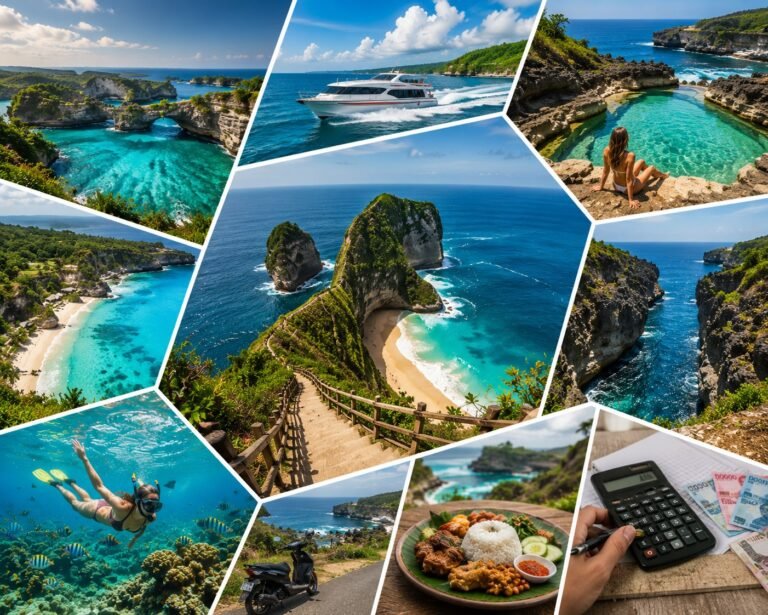
A Nusa Penida day trip is the most photographed Bali day trip you can take, and also the most rushed. Thirty minutes on a fast boat gets you to an island with cliffs that genuinely stop conversation, and then you spend seven hours being driven along broken concrete roads trying to see four of them before the last boat leaves.

It is worth doing. I just want you to book it with your eyes open, because the difference between a good version and a bad version of this trip is entirely down to decisions you make before you get on the boat. Here is what it costs, what is actually achievable in one day, and the parts I would drop without hesitation.

Is a Nusa Penida day trip worth it?

In short: yes, if you accept it is a viewpoint trip and not a beach holiday. You will see two or three extraordinary things, take a photograph you will keep for years, and spend roughly four hours of the day in a car or on a boat.

If what you want is swimming, snorkelling and a slow lunch by the water, one night on the island turns the whole thing into a different and better trip. The last boats leave around 4pm to 5pm, and everything good on Nusa Penida happens before 9am or after 4pm.

What a Nusa Penida day trip really costs

ItemTypical 2026 costNotes
Fast boat return, Sanur to Toyapakeh300,000 to 400,000 IDRRoughly $20 to $27. Book the return leg at the same time.
Harbour and island contribution25,000 to 100,000 IDRAmounts vary by operator and collection point. Always ask for a receipt.
Private driver for the day500,000 to 700,000 IDRPer car, not per person. Best value for three or four people.
Scooter hire70,000 to 100,000 IDROnly for confident riders. The roads are genuinely bad.
Site entrance fees25,000 to 45,000 IDR eachDiamond Beach is the most expensive of the main sites.
Manta snorkel trip$30 to $50Half day. Add a snorkelling permit at some sites.
Full packaged tour from Bali$55 to $95Boat, driver, fees, lunch and hotel pickup included.
Lunch at a warung40,000 to 80,000 IDRCash only. There are very few ATMs.

Indicative 2026 prices. Fees on Nusa Penida are collected at several points and change without much notice.

Doing it independently costs a couple with a shared driver roughly 900,000 to 1,200,000 rupiah all in, which makes this a mid-priced Bali day trip rather than a cheap one. A packaged tour for two lands around the same number once you account for lunch and fees, so pick based on how much organising you want to do rather than price alone.

Getting there: the fast boat from Sanur

Almost every Nusa Penida day trip leaves from Sanur, which has a purpose-built harbour and the most frequent departures. The crossing is 30 to 45 minutes to Toyapakeh or Banjar Nyuh. Boats also run from Padangbai and Kusamba, and the fast boats to the Gili Islands stop at Nusa Lembongan rather than Penida, so check the port name on your ticket rather than assuming.

Two practical points. First, take the 7am or 7.30am departure. The 9.30am boats unload the bulk of the day-trippers at once and you will spend the morning in a queue. Second, the Badung Strait gets genuinely rough between December and February, and crossings are occasionally cancelled at short notice. Check marine conditions on Indonesia’s meteorological agency BMKG before you travel in the wet season, and never book this on the same day as an international flight home. My month-by-month weather guide covers which months the sea behaves.

Take a motion sickness tablet 40 minutes before boarding if you are at all prone. These are small boats in open water and the ride back in the afternoon is usually the choppier of the two.

Three ways to do a Nusa Penida tour

  • Packaged group tour, $55 to $95. Hotel pickup in south Bali, boat, driver, fees and lunch. Easiest option, and the right one if this is your only free day. You are on someone else’s schedule and usually in a group of eight or more.
  • Boat plus private driver, arranged separately. My preferred version. You book the boat, and a driver meets you at the harbour with a car for around 500,000 to 700,000 rupiah for the day. You choose the route and the pace, and you can be at Kelingking Beach before the crowd.
  • Boat plus scooter, from 70,000 rupiah. Cheapest and the one I would not recommend to most people. The roads have severe potholes, loose gravel, blind corners and steep grades, and there is a steady stream of injured tourists on this island every week. Only if you ride regularly at home.

Whichever version of the Nusa Penida tour you pick, arrange the driver or the tour before you arrive at the harbour. Negotiating on the dock with a boat full of people doing the same thing is how you end up paying more for less. I compare the operators in my Bali day tours guide.

West coast or east coast: you cannot do both well

This is the single most important thing to understand about a Nusa Penida day trip. The island is only about 20 kilometres across, but the roads mean crossing from the west side to the east side takes 60 to 90 minutes each way. Tours that promise Kelingking, Broken Beach, Diamond Beach and Atuh in one day are selling you five hours in a car.

  • West coast (recommended for a day trip): Kelingking Beach, Broken Beach, Angel’s Billabong, Crystal Bay. All within 30 minutes of the harbour and each other.
  • East coast: Diamond Beach, Atuh Beach, Thousand Islands viewpoint, Teletubbies Hills. Quieter and arguably more beautiful, but a long drive from the port.

Pick one side. If you have a second day, do the other one.

Kelingking Beach, and whether to climb down

Kelingking Beach is the reason most people come. A limestone headland shaped unmistakably like a sleeping tyrannosaur, with white sand and turquoise water 200 metres below. The viewpoint is a five minute walk from the car park, it is free apart from small parking and site fees, and it is one of the great views in Southeast Asia. Be there by 8am. By 10am the path is a slow-moving line of people.

The descent is a separate decision. There is now a proper staircase for much of the route, but it remains a steep, exposed scramble with rope handholds in places, and the climb back up in full sun takes most people 60 to 90 minutes. Do not attempt it in flip-flops, do not start it after 2pm, and carry at least a litre of water each.

More importantly, the water at the bottom is not safe to swim in. There is a powerful shore break and a rip that runs straight out, there are no lifeguards, and there have been multiple drownings here. Go down for the sand and the perspective, not for a swim. Plenty of people do the viewpoint only and leave perfectly happy, and there is nothing wrong with that.

Broken Beach, Angel’s Billabong and Crystal Bay

Broken Beach is a collapsed sea cave forming a natural stone arch over a circular cove, with manta rays sometimes visible from the cliff path. Fifteen minutes from Kelingking Beach and worth the stop. Angel’s Billabong is a tidal rock pool beside it, and this is the one where people get hurt: at anything above low tide the swell washes straight across the pool. Look at it, photograph it, do not get in.

Crystal Bay is the only west-coast beach where you can actually swim and snorkel comfortably, with a proper strip of sand and warungs behind it. It is also the best sunset spot on the island, which day-trippers never see because they are already on the boat.

The east coast, if you have the time

Diamond Beach is the postcard: white sand, a stone stairway carved down the cliff face, and a jagged rock stack offshore. Entry is around 45,000 rupiah and the stairs are steep but properly built. Atuh Beach sits in the next cove and is safer for swimming. Thousand Islands viewpoint and the green Teletubbies Hills are both a short drive on from there.

The east coast is meaningfully quieter than the west because the drive puts most day tours off. That is exactly the argument for staying a night.

Snorkelling with manta rays

Manta Point on the south coast has resident manta rays year round, with the most reliable sightings from April to October. Half-day boat trips run roughly $30 to $50 and usually combine two or three sites including Crystal Bay and Gamat Bay.

Be realistic about conditions. The water is colder than the rest of Bali because of the upwellings that bring the mantas in, the swell at Manta Point can be substantial, and boats bob heavily while you are in the water. It is a poor choice for nervous swimmers or small children, and a genuinely brilliant morning for everyone else. Adding this to a single-day visit means you will only manage two land sites, so budget accordingly.

Entrance fees and the car park scam

Nusa Penida collects money in several places: a contribution at the harbour on arrival, parking at each site, and an entrance fee at the individual beaches. Reported amounts vary from 25,000 to 100,000 rupiah for the island contribution depending on operator and month, and the main sites charge 25,000 to 45,000 rupiah each. Budget 200,000 rupiah per person for fees and you will not be caught short.

Two things protect you. Pay only at the official ticket booth, and take the receipt. Informal collectors do operate around the car parks and beach paths, sometimes claiming a compulsory guide is required. It is not. A receipt also stops you being charged twice at the same site. Everything on this island is cash, the ATMs in Toyapakeh run dry in peak season, so bring more rupiah than you think you need from Bali.

What to skip on a Nusa Penida day trip

  • Any Nusa Penida tour listing four or more sites across both coasts. You will see the inside of a car.
  • Swimming at Angel’s Billabong. The most common serious injury on the island.
  • The Kelingking descent in the middle of the day. Full sun, no shade, and a climb back that beats a lot of people.
  • Combining Nusa Penida and Nusa Lembongan in one day. It is sold constantly and it works for neither island.
  • A scooter, if you last rode one on holiday three years ago. These roads punish inexperience.

What to bring

  • Cash in small rupiah notes, at least 500,000 per person.
  • Proper shoes with grip. Not sandals.
  • Two litres of water each and reef-safe sunscreen.
  • A dry bag, because the boat landing is often wet and sometimes done from the sand.
  • Motion sickness tablets, taken before boarding rather than on the boat.

Should you stay overnight instead?

If you have the flexibility, yes. Guesthouses on Nusa Penida run from around 250,000 rupiah a night, and one night changes the shape of everything: Kelingking Beach at 6.30am with nobody there, both coasts covered without rushing, sunset at Crystal Bay, and no boat deadline hanging over the afternoon.

A Nusa Penida day trip still delivers if a single day is what you have. Take the first boat, pick one coast, book a driver in advance, and treat Kelingking Beach as the priority rather than one of six stops. Done that way it is easily one of the best days you will have in Bali. If you are still building the rest of the itinerary, my guide to the best things to do in Bali and the area-by-area accommodation guide cover what to pair it with, and getting around Bali explains transport on the main island.

Frequently asked questions

Is a Nusa Penida day trip worth it?

Yes, provided you treat it as a viewpoint trip rather than a beach day. Take the first boat, cover one coast properly, and you will see two or three genuinely spectacular places. Trying to see the whole island in a day does not work.

How much does a Nusa Penida tour cost?

A packaged tour from Bali runs $55 to $95 per person including boat, driver, fees and lunch. Doing it independently costs about 300,000 to 400,000 rupiah for the return boat plus 500,000 to 700,000 for a driver per car, plus roughly 200,000 per person in fees.

How long is the boat from Bali to Nusa Penida?

Thirty to 45 minutes from Sanur, depending on sea conditions. Boats run from early morning until late afternoon, and the last return is usually between 4pm and 5pm. Crossings can be cancelled in rough weather between December and February.

Can you swim at Kelingking Beach?

No. There is a heavy shore break and a strong rip current, no lifeguards, and there have been several drownings. Walk down for the sand and the view if you are fit enough, but stay out of the water. Crystal Bay is the safe swimming option on that coast.

How hard is the Kelingking Beach hike?

Harder than it looks. There is a staircase for much of it now, but the route is steep and exposed, with rope handholds in sections. Allow 40 minutes down and 60 to 90 minutes back up, and do not start after 2pm.

Do I need to book a Nusa Penida day trip in advance?

Book the boat and driver at least two or three days ahead, and a week or more in July, August and around New Year. Early morning departures sell out first, and those are the ones worth having.

Is one day enough for Nusa Penida?

It is enough for one coast. Two nights lets you cover both, snorkel with the mantas, and see the island at the hours when it is quiet. If your schedule allows an overnight stay, it is a noticeably better trip.

Best Things to Do in Bali: 25 Experiences Worth Booking

The best things to do in Bali are not the ones with the longest queues, and after several trips I have a fairly firm view on which experiences justify a 4am alarm and which are just a photograph you could have taken from the car park. This is my working list of 25, ordered by category rather than ranked, with what each one costs, when to go and who it actually suits.

A word on booking, because it applies to almost all the things to do in Bali below. Some need to be arranged in advance because places genuinely sell out, some are better done on the day with a driver you trust, and a few are free if you can get yourself there. I have flagged which is which, because that distinction saves more money than any discount code.

Best things to do in Bali if you only have a week

In short: Uluwatu Temple at sunset, the Mount Batur sunrise trek, a Nusa Penida day trip, a cooking class in Ubud, and one long slow afternoon at a beach on the Bukit. Five things, seven days, and you will have seen the island properly.

Bali temples worth making the trip for

There are thousands of Bali temples and most travellers see four or five. These are the ones I would prioritise, and the Bali temples that reward an early start rather than a mid-afternoon coach stop.

1. Uluwatu Temple and the Kecak fire dance

A clifftop temple 70 metres above the sea, and at 6pm an open amphitheatre next to it fills for a Kecak performance where around 50 men chant the Ramayana without a single instrument. It is genuinely gripping, not a tourist pantomime. Tickets are around 150,000 rupiah, entry to the temple a little less. Arrive by 5pm for a decent seat, keep your sunglasses and loose earrings away from the monkeys, and read my full Uluwatu and Kecak guide before you go.

2. Tanah Lot at sunset

A sea temple on a rock that becomes an island at high tide. It is crowded, commercialised and still worth an hour, because the silhouette at sunset earns its reputation. Go on a rising tide, walk past the main viewing platform to the cliff path on the left, and skip the market on the way in.

3. Tirta Empul holy spring

An 11th century water temple near Tampaksiring where Balinese Hindus queue at stone spouts for a purification ritual called melukat. Visitors can take part, but do it properly: hire a guide at the entrance, wear the sarong they provide, bring a change of clothes, and follow the order of the spouts rather than treating it as a swimming pool. Go before 9am.

4. Besakih, the mother temple

Bali’s largest and holiest temple complex, sitting on the slopes of Mount Agung at around 1,000 metres. The scale is the point, terrace after terrace of shrines climbing the mountainside. Ticketing and guide arrangements here have historically been pushy, so book through a driver or a proper tour rather than negotiating at the gate.

5. Lempuyang, if you know what you are getting

The famous gates with Mount Agung framed between them. The reflection in the photograph does not exist. It is a mirror held under a phone lens by the staff, and the queue for that shot regularly runs two to three hours. The temple itself is beautiful and the drive out east is lovely. Go for the temple, not the picture, and arrive at 6am if you want both.

Volcanoes, waterfalls and rice terraces

6. The Mount Batur sunrise trek

Pickup around 2am, two hours of walking in the dark, and then sunrise over Lake Batur and Mount Agung from a crater rim at 1,717 metres. It is not technical and there is no altitude risk, but it is a real hike on loose volcanic gravel. Group treks run roughly 35 to 55 US dollars including transfer and a summit breakfast cooked in the steam vents. A licensed local guide is mandatory. Dry season only if you want the view. Details and operator advice are in my Mount Batur trek guide.

7. Sekumpul waterfall

The best waterfall on the island and the one that requires effort: a long drive north, a steep descent, a river crossing and a climb back out that will tell you how fit you are. Multiple falls drop into one green amphitheatre. Half a day minimum. Do not attempt it in flip-flops, and skip it entirely after heavy rain.

8. Tukad Cepung, the cave waterfall

Water falling through a gap in a cave roof with a shaft of light behind it, between roughly 9am and 11am when the sun is at the right angle. Small, busy and genuinely striking. Twenty minutes of walking each way. More options are in my roundup of the best waterfalls in Bali.

9. Tegallalang rice terraces at dawn

Twenty minutes north of Ubud, spectacular in photographs and swamped by 9am, with a small donation requested at several points along the path. Arrive at 6.30am and it is a different place entirely: mist in the valley, farmers working, nobody on the swings.

10. Jatiluwih, the terraces that deserve the trip

Far larger, far quieter, and part of the UNESCO-listed subak landscape, the thousand-year-old irrigation system that Balinese farming still runs on. There are walking loops of one to three hours through working fields. If you have time for only one rice terrace, make it this one.

11. Campuhan Ridge Walk

A free two kilometre path along a grass ridge between two rivers, starting in central Ubud. Best at 6.30am before the heat. Forty minutes out, coffee at the top, forty minutes back. The simplest good thing on this entire list.

Beaches, surf and the water

12. A surf lesson you will actually remember

Bali is one of the best places on earth to learn. Group lessons at Kuta, Canggu or Seminyak run around 350,000 to 500,000 rupiah for two hours with a board included. In the wet season the east coast at Sanur and Nusa Dua is softer and better for beginners. My beginner surfing guide covers where to learn by season.

13. Diving the Liberty wreck at Tulamben

A US Army transport ship torpedoed in 1942, lying 30 metres off a black pebble beach and reachable by walking in from the shore. You can snorkel the shallow end at five metres or dive the full hull. Genuinely one of the most accessible wreck dives anywhere. Best from April to November.

14. Manta rays at Nusa Penida

Manta Point on the south coast of Nusa Penida has resident manta rays year round, with the most consistent sightings from April to October. Snorkel trips run about 30 to 50 US dollars from the island. The water is colder than you expect and the swell can be big, so it is not the trip for nervous swimmers.

15. Snorkelling the Blue Lagoon at Padangbai

A small protected cove on the east coast with calm, clear water and enough fish to keep children entertained for an hour. Reachable independently, cheap, and a much easier morning than a boat trip. Go early before the day boats arrive.

16. A whole afternoon at a Bukit beach

Melasti, Padang Padang, Nyang Nyang, Green Bowl. White sand at the bottom of limestone cliffs, most of them reached by a long staircase. Take one, stay for five hours, do nothing. This is the thing most people wish they had done more of, and my list of the best beaches in Bali ranks them by effort required.

Bali day trips to the islands

17. Nusa Penida

Kelingking Beach, Angel’s Billabong, Broken Beach and Diamond Beach, plus roads that are genuinely rough. These are the most photographed Bali attractions of the lot. It is the most photographed day trip in Bali and the most rushed: a 30 minute fast boat each way, then a scramble between viewpoints. Staying one night makes it a far better experience. Full costs and a route are in my Nusa Penida day trip guide.

18. Nusa Lembongan and Ceningan

Smaller, flatter and far more relaxed than Penida. Cycle between the two islands over the yellow bridge, snorkel at Mangrove Point, watch the sunset from Dream Beach. Better as two nights than as one of the rushed Bali day trips that tries to combine all three islands.

19. The Gili Islands

Two and a half hours by fast boat, no cars or motorbikes on any of the three, and green turtles you can snorkel with straight off the beach. Not a day trip, and anyone selling it as one is wasting your money. Give it three nights. My Gili Islands guide explains which island to pick.

Culture, food and things to do in Bali after dark

20. A Balinese cooking class

The best value experience on the island, at roughly 350,000 to 600,000 rupiah for four or five hours. The good ones start at a morning market, explain the base spice pastes, and send you home able to actually make lawar, sate lilit and base genep. Pick a class held in a family compound rather than a hotel kitchen.

21. Ubud Monkey Forest

A genuine forest sanctuary with three temples inside it and around 1,200 long-tailed macaques. Worth an hour for the moss-covered stonework as much as the monkeys. Carry nothing loose, no plastic bags, no food, no sunglasses on your head. They will take them.

22. Grilled seafood on the sand at Jimbaran

Tables on the beach at sunset, fish picked from ice and grilled over coconut husk. It is touristy and prices are per kilogram, so confirm the weight and price before they cook. Cheaper and better at the northern end away from the big hotels.

23. One beach club, chosen carefully

Minimum spends run from 300,000 to well over 1,000,000 rupiah depending on the day and the day bed. Worth doing once for a sunset. Not worth doing three times. My Bali nightlife guide compares the main ones by cost and crowd.

24. A proper Balinese massage

A local spa charges around 100,000 to 200,000 rupiah an hour and is often as good as the resort version at five times the price. Deep, firm and not particularly gentle. See my Bali spa guide for what to book where.

25. A village ceremony, if you are lucky enough to be invited

Ceremonies happen constantly and are not tourist events, but temple anniversaries and processions are frequently open to respectful visitors. Wear a sarong and sash, stand at the back, never in front of someone praying, and ask your host or driver first. Nothing else on this list comes close.

What things to do in Bali actually cost

ExperienceTypical priceBook ahead?
Kecak dance ticket150,000 IDRSame day is fine, arrive early
Mount Batur group trek$35 to $55Yes, 2 to 5 days
Nusa Penida day trip with boat$55 to $90Yes, a week in peak season
Manta snorkel trip$30 to $50Yes, a few days
Cooking class350,000 to 600,000 IDRYes, 2 to 3 days
Surf lesson, 2 hours350,000 to 500,000 IDRSame day
Private driver, 10 hours600,000 to 900,000 IDRA day ahead
Balinese massage, 1 hour100,000 to 200,000 IDRNo
Campuhan Ridge WalkFreeNo

Indicative 2026 prices for the main Bali attractions and tours. Peak season and hotel concierge bookings run higher.

Booking Bali tours versus hiring a driver

This is the decision that changes the cost of your Bali tours most. A private driver for a full day costs 600,000 to 900,000 rupiah for the car and driver regardless of how many of you there are, and you decide the route. For temples, waterfalls and rice terraces, that beats a packaged tour every time, particularly for a group of three or four.

Booked Bali tours make sense when the experience needs equipment, a licensed guide or a boat: the Batur trek, diving, manta snorkelling, cooking classes, and anything on Nusa Penida. Book those properly. Everything else, take the driver. I have compared the main options in my Bali day tours guide.

Bali attractions I would skip

  • Swing parks. Roughly 300,000 to 500,000 rupiah for a photograph on a swing over a valley you can see for free from the road.
  • Luwak coffee plantations. The tasting is a sales floor, and the welfare of caged civets is a real problem. Buy coffee at a roastery instead.
  • Waterbom and the big water parks, unless you have children, in which case it is genuinely good.
  • Elephant and captive animal attractions. Bali is not elephant habitat, and the animals were brought here for tourism.
  • Anything sold as a five-temple day. Two sites in a day, done slowly, beats five seen through a windscreen.

The best things to do in Bali tend to be the ones with an early alarm and a bit of walking attached, and the worst are usually the ones being sold hardest at the entrance to somewhere else. Build your days around two proper experiences rather than six, keep the afternoons loose, and let a ceremony or a beach take over when it does. If you are still planning the trip itself, my Bali travel guide for first-time visitors, the area guide and the month-by-month weather guide cover everything around this list.

Frequently asked questions

What is the number one thing to do in Bali?

Uluwatu Temple with the Kecak fire dance at sunset. It combines the best clifftop setting on the island with a live performance that is genuinely absorbing, it costs around 150,000 rupiah, and it takes one evening.

How many days do I need to see the main Bali attractions?

Seven to ten days covers the main things to do in Bali without rushing. Five days lets you see the south and Ubud properly. Ten gives you time for Nusa Penida, the east coast and a slower pace. Anything under five means choosing one region and staying there.

Do I need to book Bali tours in advance?

Only for the ones that need a guide, equipment or a boat. Book the Mount Batur trek, diving, manta snorkelling, cooking classes and Nusa Penida trips a few days ahead, more in July and August. Temples, beaches and waterfalls need nothing but a driver.

What are the best free things to do in Bali?

The Campuhan Ridge Walk, sunset from any Bukit clifftop, wandering a morning market, watching a temple procession, and most beaches. Bali is expensive in the places built for visitors and close to free everywhere else.

Is the Mount Batur trek still allowed?

Yes. A blanket ban on mountain activities was announced by the provincial governor in 2023 but was never enforced, and treks have run continuously since. A licensed local guide is required, which is a sensible rule rather than an obstacle.

Which Bali day trips are worth it?

Nusa Penida if you accept it will be rushed, Sekumpul waterfall, and a temple-plus-rice-terrace day with a private driver. Skip anything advertising four or more sites, and treat the Gili Islands as an overnight rather than a day out.

Are the Bali temples free to enter?

Most charge a small entry fee, generally 30,000 to 100,000 rupiah, which usually includes sarong hire. Dress modestly with shoulders and knees covered, and do not enter the inner courtyards, which are reserved for worshippers.

Where to Stay in Bali: Best Areas for Every Type of Traveller

Where to stay in Bali is the single decision that shapes your whole trip, and most people get it wrong by booking one hotel for ten nights in an area that only suits three of them. Bali is not a resort town. It is an island of about 145 kilometres with a mountain range down the middle, terrible traffic in the south, and half a dozen places that feel like entirely different countries.

I have stayed in most of these areas, some of them repeatedly, and my honest answer to where to stay in Bali is this: pick the two or three that match what you actually want to do, split your nights between them, and accept that you cannot see the whole island from one base. Below is every area worth considering, who it suits, what it costs, and the specific reason you might hate it.

Where to stay in Bali: the quick answer

In short: Canggu for the scene, Seminyak for comfort, Ubud for culture, Uluwatu for cliffs and surf, Sanur for families, Nusa Dua for pure resort holidays. If you only read one line, read that one.

You areBest areaSecond choiceRough nightly rate
First-timer, want a bit of everythingCangguSeminyak$45 to $130
Couple after restaurants and beach clubsSeminyakUluwatu$70 to $250
Here for culture, yoga, rice fieldsUbudSidemen$35 to $180
Surfer chasing real wavesUluwatu / the BukitCanggu$40 to $200
Family with young kidsSanurNusa Dua$60 to $200
Honeymoon or anniversaryNusa Dua or JimbaranUluwatu$120 to $600
Diver or snorkellerAmed or TulambenPemuteran$25 to $90
Working remotely for a monthCangguUbud$500 to $1,800 monthly
Backpacking on a tight budgetKuta or UbudAmed$10 to $30

Indicative rates for a decent double room or small private villa. Peak season in July, August and around New Year runs 40 to 60 percent higher.

Canggu, for first-timers who want a scene

Canggu is what most people picture when they imagine modern Bali. Rice paddies with cafes built into them, a black sand beach with a decent beginner wave, sunset bars along Batu Bolong and Berawa, and an enormous population of remote workers who have been here six months and are not leaving.

It works brilliantly if you want variety within walking distance. Good coffee, gyms, surf lessons, co-working, and food that ranges from a 25,000 rupiah nasi campur to a 400,000 rupiah tasting menu, sometimes on the same street.

The honest downside. The traffic is genuinely bad and getting worse. Batu Bolong at 6pm is a single-lane crawl, and a three kilometre trip can take 35 minutes. Construction is constant. The beach is not beautiful in the postcard sense, it is dark grey volcanic sand with strong currents in places. And if you came to Bali for temples and quiet, Canggu will annoy you within two days.

Where within Canggu. Batu Bolong for walkability and noise, Berawa for slightly more polish and beach clubs, Pererenan for calm and better value, Nyanyi and Seseh if you want to be genuinely out of it. My full Canggu travel guide breaks these down street by street.

Seminyak, for comfort without the effort

Seminyak is the polished option. Wide beach with actual sunset loungers, the highest concentration of good restaurants on the island, boutique shopping along Jalan Kayu Aya, and villa stock that is a decade more mature than Canggu’s. If you want to land, unpack, and have everything work, this is the area.

It suits couples, groups of friends, and anyone who does not want to ride a scooter. Distances are short enough to walk or take a five minute car ride, which matters more than it sounds.

The honest downside. It is expensive relative to what you get, it has almost no Balinese character left, and the beach vendors are persistent. Petitenget and Kerobokan just north are quieter and roughly 20 percent cheaper for similar quality. If you are torn between the big three, I compared them directly in Seminyak vs Canggu vs Ubud.

Ubud, for culture and slowing down

Ubud sits inland in the hills, about 90 minutes from the airport, surrounded by rice terraces and river valleys. It is the cultural centre of the island: temples, dance performances, wood carving villages, art museums, and the largest concentration of yoga and wellness places anywhere in Southeast Asia.

It is also cooler than the coast, particularly at night, and greener in every month. Two or three nights here as part of a longer trip is the split I recommend to almost everyone.

The honest downside. Central Ubud around the Monkey Forest and the market is heavily touristed and the traffic surprises people who expected serenity. There is no beach. And it rains more here than in the south in every single month, which is worth knowing if you are travelling between November and March. My best time to visit Bali guide has the monthly rainfall by region.

Where within Ubud. Stay 10 to 15 minutes out, in Penestanan, Sayan, Nyuh Kuning or up towards Tegallalang, and you get the valley views people come for at a lower price. Details are in my Ubud travel guide.

Uluwatu and the Bukit, for cliffs and surf

The Bukit peninsula in the far south is limestone cliffs, white sand coves at the bottom of long staircases, and the best surf on the island from May to September. Uluwatu has quietly become the most desirable address in Bali, and the clifftop hotels charge accordingly.

One thing to know before you book. In July 2025 the provincial government demolished more than 40 structures at Bingin Beach, including warungs, homestays and small hotels, after ruling they had been built without permits on state land. The ABC covered the demolition in detail. Beach access at Bingin has been difficult since, and a staged redevelopment with new stairs, a proper access path and facilities was announced in May 2026. If a listing advertises beachfront dining at Bingin, verify what is actually open before you pay.

The honest downside. Everything is spread out and you will need a scooter or a driver for every meal. Beach access almost always means stairs, sometimes a lot of them. And it is a long way from the rest of the island, so pair it with the airport at the start or end of a trip rather than in the middle.

Sanur, the underrated choice for families

Sanur is on the east coast, faces the sunrise, and is protected by a reef, which means the water is flat and shallow. There is a paved beachfront path running about five kilometres with cafes along it, and you can walk with a pram or cycle it with children without touching a road.

It is 25 minutes from the airport, it has a hospital, and the fast boats to Nusa Penida and the Gili Islands leave from here. For families and for older travellers it is the most functional area on the island, and it is meaningfully cheaper than Seminyak.

The honest downside. It is quiet. The nightlife is a handful of pleasant bars and that is it. Younger travellers often find it dull, and the tide goes a long way out, which makes swimming a mid-morning to afternoon activity. If you want more options like this, see my best family resorts in Bali.

Nusa Dua and Jimbaran, for resort holidays

Nusa Dua is a gated enclave of large international resorts with manicured lawns, private beach sections and calm water. Nothing about it feels like Bali, and for a certain kind of trip that is exactly the point. Honeymoons, anniversaries, and holidays where the plan is to not leave the property.

Jimbaran, ten minutes north, is a better compromise. Big resorts on a genuinely lovely bay, a working fish market, and the seafood grills on the sand that everyone photographs at sunset. It also sits closest to the airport of any resort area.

The honest downside. Nusa Dua is sterile and everything inside the enclave costs resort prices. You are effectively paying to be insulated from the island. If that is not what you want, spend the same money on a private villa in Uluwatu and get the same comfort with a view. I have listed options for both in Bali villas with a private pool.

Kuta and Legian, and who should still consider them

Kuta has a reputation and mostly deserves it. Aggressive touts, tired buildings, a long beach that gets a lot of litter, and a nightlife strip that is not to everyone’s taste. I would not send a couple or a family here.

What Kuta still does well is cheap. Clean dorm beds sit around 100,000 to 150,000 rupiah, private rooms not much more, and it is 15 minutes from the airport with a genuine beginner surf beach. For a first or last night, or for a backpacker counting every rupiah, it is a defensible choice. Legian just north is a calmer version of the same thing.

Amed, Lovina and the quiet coasts

Amed on the east coast is a string of black sand fishing villages with a coral wall a few metres offshore and the Liberty wreck at Tulamben a short drive north. Rooms are cheap, the water is clear, and there is almost nothing to do beyond dive, snorkel and watch Mount Agung change colour at dusk. That is the appeal.

Lovina in the north is similar in spirit, calmer water, cheaper again, and further from everything. Both are three hours from the airport. Both are best as a two or three night addition rather than a base, and both feel like the Bali people describe from twenty years ago.

Sidemen and Munduk, for the version nobody photographs

Sidemen is a valley of working rice terraces east of Ubud with a handful of small guesthouses and views straight up at Mount Agung. Munduk is up in the highlands near the lakes, cool enough for a jumper at night, with waterfalls and coffee plantations and cloud that rolls through the room in the morning.

Neither has restaurants worth travelling for or anything resembling nightlife. Both are the best two nights of a lot of trips. Roads inland are rough, particularly in the wet season, so use a driver rather than a scooter.

How to split your nights across Bali areas

Traffic makes day-tripping across the island exhausting. Ubud to Uluwatu is 70 kilometres and can take two and a half hours. Moving base twice is almost always better than commuting.

  • 5 nights: 3 in Ubud, 2 in Canggu or Seminyak.
  • 7 nights: 3 in Ubud, 2 in Canggu, 2 in Uluwatu. This is the split I recommend most often.
  • 10 nights: 3 Ubud, 3 Canggu or Seminyak, 2 Uluwatu, 2 on Nusa Penida or in Amed.
  • 14 nights: add Sidemen or Munduk, and give the Gili Islands or Nusa Lembongan three nights.
  • Families: Sanur as the base, with two or three nights in Ubud in the middle.

Book your last night close to the airport, in Sanur, Jimbaran, Kuta or south Seminyak. A 7am flight out of Ubud means leaving at 4am, and no view is worth that. My 7-day Bali itinerary for couples follows this structure day by day, and the airport transfer guide covers what each run should cost.

Where to stay in Bali on your budget

  • Under $25 a night. Ubud outskirts, Amed, Lovina, Kuta. Clean, simple guesthouses with a fan or basic aircon, often family run and often better than the photos.
  • $40 to $80. The sweet spot. A private villa with a small pool in Pererenan, Penestanan or Sanur, or a good boutique hotel in Seminyak in low season.
  • $100 to $200. Design hotels in Canggu and Seminyak, valley villas in Ubud, cliffside rooms on the Bukit.
  • $300 and up. Clifftop suites in Uluwatu, the Ayung river resorts near Ubud, the big names in Nusa Dua and Jimbaran.

Two booking habits that save real money. Compare the same property on more than one platform, because rates for identical rooms diverge by 15 to 20 percent surprisingly often. And message small guesthouses directly for stays over a week, since most will beat the online rate rather than pay commission. The full picture of what a trip costs is in my Bali trip cost breakdown, and my shortlist of properties is in the best hotels in Bali.

Mistakes people make choosing where to stay in Bali

  • Booking one hotel for the whole trip. The most common and most expensive mistake in time terms.
  • Trusting the map pin. A villa 800 metres from the beach can be 20 minutes away on foot because the connecting road does not exist. Check the walking route, not the straight line.
  • Ignoring the traffic direction. Being on the wrong side of Canggu or Seminyak adds 30 minutes to every evening.
  • Assuming beachfront means swimmable. Much of the south and west coast has strong currents and a steep shore break.
  • Underestimating road noise. Villas on main roads in Canggu and Kuta are loud from 6am. Read reviews specifically for the word noise.
  • Booking Ubud for a beach holiday. There is no beach. It happens more than you would think.

Deciding where to stay in Bali comes down to being honest about the trip you want rather than the trip Instagram sold you. Pick two or three areas, give each of them enough nights to be worth the move, and put the last one near the airport. If this is your first trip, my Bali travel guide for first-time visitors covers everything around the accommodation decision, and getting around Bali explains how to move between these areas without losing half a day.

Frequently asked questions

Where should I stay in Bali for the first time?

Split it. Three nights in Ubud for culture and rice fields, then three or four in Canggu or Seminyak for the beach and the food. That combination shows you the two sides of the island without a long transfer between them.

Is Canggu or Seminyak better?

Canggu if you are under 35, want cafes and surf, and do not mind construction and traffic. Seminyak if you want a proper beach, better restaurants, walkable streets and a more finished feel. Seminyak costs more for equivalent quality.

Which part of Bali is best for families?

Sanur. The reef makes the water calm and shallow, the beachfront path is safe for children on bikes, it is close to the airport and a hospital, and it costs less than the equivalent in Seminyak or Nusa Dua.

How many areas should I stay in on a 7 day trip?

Two, or three at most. When you work out where to stay in Bali across a week, remember each move costs you the better part of a day once you account for check-out, transfer and check-in. Three nights Ubud, two Canggu, two Uluwatu works well if you want all three.

Is it better to book a villa or a hotel in Bali?

Villas win for couples and groups, since a private pool costs less here than almost anywhere. Hotels win for solo travellers, first-timers who want a front desk, and families who need a kids club. Below $60 a night the villa is usually the better value.

How far in advance should I book accommodation in Bali?

Two to three months for July, August and the Christmas period. Four to six weeks in May, June, September and October. During the wet season a week or two is usually enough, and walk-up rates at small guesthouses are often better than online prices.

Do I need a scooter where I stay in Bali?

In Seminyak, Sanur and Nusa Dua, no. In Canggu, Uluwatu, Amed and anywhere inland, either a scooter or a regular driver, because the areas are spread out and walking is not realistic. Ride-hailing apps work but are restricted near some taxi stands.

Best Time to Visit Bali: Complete Month-by-Month Guide 2026

The best time to visit Bali is April to October, when the dry season keeps mornings clear, roads passable and the sea flat enough to actually enjoy. That is the short answer, and most guides stop there. It is also the answer that funnels everyone onto the same island in the same eight weeks, then leaves them sitting in Canggu traffic wondering what went wrong.

I want to give you the longer answer, because the honest version is more useful. Bali does not have a good season and a bad season. It has a dry season that costs more, and a wet season that costs less and rains mostly in the afternoon. Which one suits you depends entirely on what you are coming for.

Best time to visit Bali: the short answer first

In short: May, June and September are the sweet spot. You get dry season weather without July and August prices, and the island still feels like a place people live rather than a queue with a view.

  • For reliable sunshine: May to September.
  • For the best value: late April, early May, or the first three weeks of October.
  • For surfing the west coast: May to September.
  • For diving and snorkelling: April to November, with the calmest water around August and September.
  • For cheap villas and green rice fields: February, once the New Year crowd has flown home.
  • To avoid entirely if you can: the last week of December and the first week of January.

Bali weather month by month, in numbers

These are long-term averages recorded at the airport station in south Bali, which covers Kuta, Seminyak, Canggu, Jimbaran and Nusa Dua. Round them off in your head rather than treating them as a forecast. Ubud sits inland and runs a little wetter and a few degrees cooler at night. The north coast around Lovina and the highlands at Kintamani follow their own rules entirely.

MonthDay / nightRainWet daysWhat it feels like
January31C / 25C~350 mm19Wettest month. Heavy afternoon storms, humid mornings.
February31C / 25C~280 mm17Still wet, but quiet and cheap. Rice fields at their greenest.
March31C / 25C~200 mm14Rain easing. Nyepi shuts the island down for 24 hours.
April32C / 25C~90 mm8The changeover. Hot, mostly dry, prices still reasonable.
May31C / 24C~90 mm7Excellent. Dry season weather, low season pricing.
June30C / 23C~60 mm5Clear, breezy, comfortable. Crowds start building late in the month.
July29C / 23C~55 mm5Peak season. Best weather, worst traffic, highest rates.
August29C / 23C~20 mm3Driest month of the year. Also the busiest and most expensive.
September30C / 23C~35 mm3My favourite. Dry, calm seas, crowds thinning out.
October31C / 24C~75 mm6Shoulder season. Humidity returns, first storms arrive late.
November31C / 25C~140 mm11Wet season starting. Still plenty of usable dry hours.
December31C / 25C~280 mm17Wet and expensive. The worst combination of the year.

Long-term monthly averages for south Bali. Actual conditions vary year to year.

The dry season, April to October, and what it actually buys you

The dry season is genuinely dry. August averages three wet days for the entire month, which is the sort of number that lets you book a sunrise trek four days out and not think about it again. Humidity drops, the light goes hard and clean, and a breeze comes off the ocean in the afternoon that makes 29 degrees feel like nothing.

What the dry season costs you is space. July and August coincide with European and Australian school holidays, so the same weather that draws you draws everyone else. Villa rates in Seminyak and Uluwatu climb 40 to 60 percent over low season. The road from the airport to Canggu, which is 13 kilometres, can take 90 minutes at 6pm. Popular restaurants stop taking walk-ins. Nusa Penida gets busy enough that the queue for the Kelingking viewpoint is a real queue with a real wait.

None of that ruins a trip. It just means you plan differently: book accommodation two to three months ahead, book the popular day trips before you land, and treat 5pm to 7pm as time you spend somewhere pleasant rather than in a car. If you are working out what a trip in this window costs, my full Bali budget breakdown has the real numbers.

The rainy season is not the washout people expect

This is where most advice about the best time to visit Bali goes wrong. The wet season, roughly November to March, is described as if the island disappears under water for five months. It does not. What actually happens is that mornings stay bright, cloud builds through the middle of the day, and somewhere between 2pm and 5pm the sky opens for an hour or two. Then it stops, everything steams, and the evening is warm and clear.

January is the exception and I would not recommend it. Nineteen wet days in a month means multi-day systems, not tidy afternoon showers, and the beaches on the west coast collect an ugly amount of plastic that the currents bring in from December to February. February is different: still wet on paper, but far quieter, considerably cheaper, and the rice terraces around Ubud and Sidemen are at their most absurdly green.

Practical things that change during the rainy season. Scooter riding gets genuinely risky on wet tarmac, so factor in a driver. Waterfalls run hard and brown rather than clear, which makes for dramatic photos and poor swimming. Sea visibility around Amed and Tulamben drops. Some smaller warungs and beach clubs close for renovation. And a few of the rough roads inland, particularly around Munduk, turn into something you would not want to attempt on two wheels.

Best time to visit Bali for the lowest prices

Price and weather do not move together, and the gap between them is where the good trips hide. Rates track school holidays and the Christmas period far more closely than they track rainfall. That produces three genuine bargain windows.

  • Mid-January to early March. The cheapest weeks of the year. Wet, but you will pay half what a July traveller pays for the same villa.
  • Late April to mid-June. The best value on the calendar. Dry season conditions have arrived, peak pricing has not.
  • Mid-September to mid-October. Weather still holding, rates already dropping, restaurants easy to get into.

The reverse is worth knowing too. From roughly 20 December to 5 January, Bali charges what it likes. Villas apply minimum-stay rules of five to seven nights, many add a compulsory New Year dinner to the bill, and flights from Australia and Singapore double. It also happens to be the second wettest stretch of the year. If your dates are fixed and that is the only window you have, book early and set expectations accordingly. Where you base yourself matters more than usual in that period, and my guide to the best areas to stay in Bali goes through the trade-offs by neighbourhood.

Dates to plan around, whatever month you choose

Two Balinese observances can reshape a trip, and one of them closes the airport.

Nyepi, the day of silence

For 24 hours the entire island stops. No flights land or depart, the airport shuts completely, shops close, and everybody, tourists included, stays inside their accommodation. Lights stay off or dimmed after dark and mobile data is switched off across Bali, though hotel wifi usually keeps running. Nyepi fell on 19 March in 2026. It moves each year with the Saka lunar calendar and lands in early March in 2027, with sources listing either the 8th or the 9th, so confirm the date before you book flights. Arrive at least a day before and leave at least a day after.

The evening before Nyepi is the ogoh-ogoh parade, when villages carry enormous demon effigies through the streets and then burn them. It is one of the best nights of the year to be on the island, and it costs nothing to watch.

Galungan and Kuningan

A ten-day festival that recurs every 210 days, so it can land in any month. Bamboo penjor poles line every road and the island looks extraordinary. Practically, many family-run businesses close for a day or two and traffic around temples gets heavy. Nothing to avoid, just something to know.

Regional holidays that fill the hotels

Indonesian domestic tourism surges around Idul Fitri, and Chinese New Year brings a wave of visitors in late January or February. Neither affects the weather, both affect availability, and both are easy to check against your dates before you commit.

Best time to visit Bali for surfing, diving and trekking

If you are coming for one specific activity, the calendar tightens up considerably.

Surfing. The dry season sends offshore winds across the west coast, which is why Uluwatu, Padang Padang and Bingin fire between May and September. Beginners are better off in the wet season, when the east coast at Sanur, Nusa Dua and Keramas turns on and the west coast beach breaks at Canggu and Kuta are softer and more forgiving.

Diving and snorkelling. Visibility is best from April to November. Manta rays are around Nusa Penida all year, though sightings are most consistent from April to October. Mola mola, the strange oceanic sunfish, appear in the cold upwellings roughly July to October, and the water at those sites is genuinely cold by tropical standards. Bring a wetsuit rather than assuming a rash guard will do.

Volcano treks. Mount Batur is a dry season activity. Cloud cover in the wet months regularly hides the sunrise you got up at 2am for, and the trail turns slippery. June to September gives you the best odds of the view you actually paid for. If that is on your list, my Mount Batur sunrise trek guide covers prices and what the tour includes.

Boat crossings. The Bali Sea gets choppy from December to February and fast boats to Nusa Penida, the Gilis and Lombok are occasionally cancelled. Nothing dangerous if you book with a reputable operator, but do not schedule a crossing on the same day as a flight home during those months. The Nusa Penida day trip in particular is much more pleasant on a calm dry season morning.

Bali weather changes depending on where you stay

The island is only 145 kilometres across but it has a mountain spine down the middle, and that spine creates several distinct climates.

  • South Bali (Canggu, Seminyak, Uluwatu, Nusa Dua) is the driest and sunniest part of the island. Every number in the table above describes this region.
  • Ubud and the central hills catch more cloud and more rain in every month. Nights drop to a pleasant 22 degrees. Bring a light layer.
  • The highlands at Kintamani, Bedugul and Munduk sit above 1,000 metres and get properly cold after dark, sometimes down to 15 degrees. A jacket is not optional.
  • North and east (Lovina, Amed, Tulamben) sit in a rain shadow and stay drier and hotter. Amed in October is a furnace.

This is worth using deliberately. A December trip that would be soggy in Ubud can work well if you base yourself in Amed or Sanur instead. Whatever you pack, a light rain jacket earns its space in the bag in any month, and my Bali packing list covers what else actually gets used.

What to book, and how far ahead

Lead times shift with the season more than people expect.

  • July, August and Christmas: flights three to four months out, villas two to three months out, popular tours a week or more ahead.
  • May, June, September, October: four to six weeks is comfortable for everything.
  • Wet season: a week or two is usually enough, and walk-up rates at smaller guesthouses are often better than anything online.

Two admin items apply regardless of your dates. Every foreign visitor pays a one-off tourist levy of IDR 150,000, around 10 US dollars, which you should pay in advance on the official government portal at lovebali.baliprov.go.id and keep as a QR code on your phone. Fake levy sites are everywhere and they overcharge, so check that the address ends in .go.id. The levy is separate from your visa, which is covered in my Bali visa on arrival guide. If this is your first trip, start with my Bali travel guide for first-time visitors, and couples can lift the route straight from my 7-day Bali itinerary for couples.

So what is the best time to visit Bali for you

If you want certainty, go in June or September and accept that you are paying for it. If you want value, go in May or early October and you will barely notice the difference. If you want the island quiet and cheap and you can live with an afternoon downpour, February is a genuinely underrated month that almost nobody recommends.

The best time to visit Bali is really the month where the weather, the price and the crowd level line up with what you actually want from the trip. For most people that is May, June, September or October, and for a smaller group willing to trade sunshine for space, it is the wet season. Pick your priority first and the month sorts itself out.

Frequently asked questions

What is the best month to visit Bali?

September. The dry season is still holding, the sea is calm, and the July and August crowds have gone home, so you get peak conditions without peak prices. June is a close second.

What is the rainiest month in Bali?

January, with roughly 350 mm of rain spread over about 19 wet days. December and February are close behind. August is the driest month, averaging only around three wet days.

Is it worth visiting Bali in the rainy season?

Yes, with one exception. Rain usually falls in a heavy afternoon burst rather than all day, and accommodation costs far less. I would avoid January specifically, when the rain settles in for longer stretches and west coast beaches collect plastic.

When is the cheapest time to visit Bali?

Mid-January to early March is cheapest overall. For the best balance of price and weather, late April to mid-June and mid-September to mid-October give you dry conditions at close to low season rates.

How busy is Bali in August?

Very. Bali in August is the peak of the year because it is the driest month and it overlaps with European and Australian school holidays. Expect villa rates 40 to 60 percent above low season, heavy traffic in the south, and long waits at popular viewpoints.

Does Bali close down for Nyepi?

Completely, for 24 hours. The airport shuts, no flights operate, mobile data is switched off and everyone stays inside their accommodation. It falls in March most years and moves annually, so check the date before booking flights.

How much rain falls during the dry season in Bali?

Very little. From June to September, monthly totals sit between roughly 20 and 60 mm across three to five wet days, which is why the dry season is the most reliable window for treks, boat crossings and beach days.

Ultimate 7-Day Bali Itinerary for Couples: Best Romantic Trip

Bali was practically built for couples. One island gives you cliff-top sunsets, candlelit seafood with your feet in the sand, misty rice terraces, waterfalls you’ll have half to yourselves at dawn, and spa afternoons that erase whatever you flew in carrying. The trick is pacing. This 7-day Bali itinerary for couples is designed to feel romantic rather than rushed, moving you through the island in a logical arc so you’re never backtracking and never spending your honeymoon energy stuck in traffic.

Seven days is the sweet spot. It’s long enough to cover the south coast, the cultural heart around Ubud, and a day trip to Nusa Penida, with breathing room for the slow mornings that make a trip feel like a holiday. Here’s how to spend each one.

How to Use This Bali Itinerary for Couples

This plan splits your week into two bases: a few nights in the south near the beaches, then the rest around Ubud inland. Booking just two hotels instead of moving every night saves you a surprising amount of stress and packing.

Hire a private driver for the travel and day-trip days; it’s affordable, comfortable, and far more romantic than wrestling a scooter through traffic. Sort your visa, tourist levy, and arrival card before you fly, all of which we break down in our Bali travel guide for first-time visitors. And aim for the dry season, roughly April to October, for the best sunsets, as covered in our best time to visit guide.

Day 1: Arrive and Settle Into the South

Land, breathe, and don’t over-plan day one. Base yourselves around Seminyak or Canggu, where you’re close to the beach, the best dinners, and easy sunsets.

Once you’ve checked in and shaken off the flight, head to the beach for your first Bali sunset. A beach club is the easy win here, order a cocktail, sink into a daybed, and watch the sky go pink over the Indian Ocean. Keep dinner relaxed and nearby. You’ve got a full week ahead.

Romantic touch

Book a hotel with a private pool or a floating breakfast for the next morning. It’s a small splurge that sets the tone for the whole trip.

Day 2: Uluwatu Cliffs and a Sunset Fire Dance

Spend the day on the Bukit Peninsula, Bali’s dramatic southern tip. The beaches here sit beneath tall limestone cliffs, the water is turquoise, and the whole area feels a notch wilder than the north.

Late afternoon, make your way to Uluwatu Temple, perched right on the cliff edge. Time it for the Kecak fire dance at sunset, a chanting, fire-lit performance staged against the open ocean as the sun drops. It’s genuinely one of the most atmospheric experiences on the island, and it’s hard to beat as a couple.

Dinner with your feet in the sand

Roll the evening into a seafood dinner on Jimbaran Bay, where tables are set right on the beach and the grills run on coconut husks. Fresh fish, candlelight, waves a few metres away. This is the classic romantic Bali night, and it lives up to it.

Day 3: Drive North to Ubud and Slow Right Down

Check out and have your driver take you inland to Ubud, stopping along the way. It’s about a 90-minute drive, and breaking it up keeps it easy.

A perfect mid-route stop is the Tegalalang Rice Terrace, with its sculpted green steps and the famous jungle swings that fling you out over the valley, terrifying and wonderful in equal measure, and a guaranteed photo you’ll keep. Arrive earlier in the day to beat both the heat and the crowds.

Settle into your Ubud hotel by afternoon. Choose a place tucked into the jungle or overlooking the rice fields, and book a couples massage for the evening. Ubud is the spa capital of Bali, and the quality-to-price ratio is unreal.

Day 4: Waterfalls, Water Temples, and a Ridge Walk

Start early with the Campuhan Ridge Walk, a gentle green spine just outside town that’s loveliest at sunrise before the day heats up. It’s free, quiet, and the perfect slow start.

From there, give the day to water. Tirta Empul is a holy spring temple where you can take part in the purification ritual, a moving, surprisingly intimate thing to do together. For waterfalls, Tukad Cepung is special: you wade through a small canyon to a chamber where light beams pour down through the rocks in the morning.

Evening

Head back for a long dinner in central Ubud. The town has an easy, leafy buzz after dark, and it’s walkable, so you can wander, find a wine bar, and call it a night whenever you like.

Day 5: Day Trip to Nusa Penida

This is the big-ticket adventure day, and it’s worth the early alarm. A fast boat from Sanur gets you to Nusa Penida in about 45 minutes, where the scenery turns almost unreal.

The headline is Kelingking Beach, the T-Rex-shaped cliff you’ve seen all over Instagram, except it’s even better in person. Pair it with Angel’s Billabong and Broken Beach on the west side, or trade the viewpoints for snorkelling at Crystal Bay, where, in the right season, you can swim alongside manta rays. The island’s roads are rough, so book a driver or a guided tour rather than going it alone. For the full breakdown, see our Nusa Penida day trip guide.

You’ll be back in Bali by evening, happily exhausted. Keep dinner simple and close to your hotel.

Day 6: East Bali, Sidemen, and the Gates of Heaven

For your last full day, swap crowds for countryside. The Sidemen Valley in east Bali is what Ubud felt like decades ago: terraced rice fields, quiet lanes, and barely another tourist in sight. It’s the most underrated romantic corner of the island.

On the way, stop at Lempuyang Temple for the “Gates of Heaven,” the split-gate frame with Mount Agung rising between it. It’s stunning, though be warned the photo queue can be long, so go early or treat it as a quick stop rather than the whole day.

For early risers

If you both love an adventure, swap this day for a pre-dawn Mount Batur sunrise trek. You hike up an active volcano in the dark and watch the sun break over the caldera with a coffee in hand. It’s a 2am start, but couples rarely regret it.

Day 7: A Slow Goodbye

Don’t cram your last day. Sleep in, take a long breakfast, and squeeze in one final spa session or a lazy pool morning.

If your flight is in the evening, end where Bali does it best: a sunset at Tanah Lot, the sea temple that sits on a rock just offshore, glowing as the tide comes in. It’s a fitting last image to fly home with.

Where to Stay for Couples

  • South (Days 1–2): Seminyak for polish and beach clubs, or Uluwatu for clifftop drama and privacy.
  • Ubud (Days 3–6): A jungle or rice-field villa with a private pool. This is where the floating-breakfast, infinity-pool photos happen.
  • Honeymoon splurge: Sidemen or the Sayan ridge outside Ubud for valley views and total quiet.

For seasonal stay offers, check our latest Bali travel deals before booking.

Romantic Extras Worth Booking

  • A floating breakfast in your private pool, the signature Bali couples moment.
  • A couples spa day with a flower-bath finish, easy to arrange and inexpensive in Ubud.
  • A private candlelit dinner on the beach or in the rice fields, offered by many hotels.
  • A private driver for the week so you’re never navigating, just enjoying the view together.

What This Trip Costs

Bali flexes to almost any budget. A comfortable mid-range couples trip, nice villas, a private driver, a mix of beach clubs and local warungs, lands around USD 100–180 a day for two. Go full honeymoon with luxury resorts and private tours and you can easily double that; keep it simple with guesthouses and local food and you can spend far less. The experiences that matter most here, sunsets, waterfalls, ridge walks, are mostly free.

Final Thoughts

The best version of this Bali itinerary for couples is the one you don’t rush. Build in the slow mornings, say yes to the floating breakfast, and let a few plans slide when a pool and a good book win out. Sort the logistics early, base yourselves in two spots, and let the island handle the romance, because in Bali, it usually does.

Bali Itinerary for Couples: FAQ

Is 7 days enough in Bali for couples?

Yes, seven days is ideal. It covers the southern beaches, the culture around Ubud, and a Nusa Penida day trip, with enough downtime to actually relax. Ten days lets you add the Gili Islands or east Bali at a slower pace.

What is the most romantic area of Bali to stay in?

Ubud is the top pick for couples thanks to its jungle villas, private pools, and spas. For drama and privacy, Uluwatu’s clifftop resorts are hard to beat, and Sidemen offers quiet rice-field romance away from the crowds.

How much does a 7-day couples trip to Bali cost?

A comfortable mid-range trip runs roughly USD 100–180 a day for two, covering villas, a driver, and a mix of dining. Luxury honeymoons cost more, while budget-conscious couples can do it for noticeably less.

What is the best time of year for a romantic Bali trip?

The dry season, April to October, gives you the clearest skies and best sunsets. April, May, and September balance great weather with smaller crowds, which suits couples looking for a quieter, more intimate feel.

Should couples rent a scooter or hire a driver in Bali?

For a romantic trip, a private driver is the better call. It’s affordable, stress-free, and lets you both enjoy the scenery on travel and day-trip days without dealing with chaotic traffic or parking.

Ultimate Bali Travel Guide for First-Time Visitors: 15 Best Tips

0

So you’ve finally booked Bali. Good call. The island has a way of living up to the hype while still surprising you, and the only real mistake first-timers make is trying to see all of it in one trip. This Bali travel guide for first-time visitors is built to keep you out of the common traps: the visa confusion, the wrong neighbourhood, the scooter you weren’t ready for, and the little customs that locals quietly appreciate when you get them right.

Bali isn’t difficult to travel. It’s just easy to misjudge if you arrive expecting one thing and find another. The beaches in the south are nothing like the rice terraces in the centre. A week here can feel rushed or perfectly paced depending on how you split your time. Keep this Bali travel guide for first-time visitors handy while you plan, and you’ll sidestep the rookie mistakes most people only learn the hard way. Let’s get you sorted before you land.

First Things First: Entry Rules You Can’t Skip

There are three separate steps for most foreign visitors, and people mix them up constantly. They are not the same thing, and skipping one usually means queuing at the airport when you’d rather be in a taxi.

Visa on Arrival (e-VOA)

Travellers from roughly 90 eligible countries can enter on a Visa on Arrival. It costs IDR 500,000 (about USD 35), allows a 30-day stay, and can be extended once for another 30 days, for a maximum of 60.

You have two ways to get it. Buy it at the counter when you land, or apply for the electronic version (e-VOA) ahead of time through the official immigration site at evisa.imigrasi.go.id. The e-VOA is worth the few extra minutes online. It lets you use the automated e-gates and skip the on-arrival queue, which matters a lot if your flight lands late at night when the manual counters get slow.

A few things to have ready: a passport valid for at least six months, a return or onward ticket, and proof of where you’re staying for the first night. If you’re dreaming of a longer stay, the VOA caps out at 60 days and can’t be converted, so read up on your options in our guide to staying in Bali long-term.

The Bali Tourist Levy

Separate from your visa, Bali charges a one-time tourist levy of IDR 150,000 (around USD 10) per person, children included. It funds cultural and environmental preservation on the island.

Pay it before you fly through the official Love Bali platform at lovebali.baliprov.go.id or the Love Bali app. You’ll get a QR code by email. Screenshot it and keep it on your phone, because tourism officers do run spot checks at busy spots like Tanah Lot and Uluwatu, and you’ll be asked to pay on the spot if you can’t show proof. Stick to the official site only; plenty of copycat pages charge double for the same thing.

The All Indonesia Arrival Card

This one is newer and catches people out. Since late 2025, every traveller must complete the All Indonesia Arrival Card, a free digital declaration that combines the old immigration, customs, and health forms into one. Fill it in within three days before you arrive. It’s quick and free, and it’s completely separate from both your visa and the levy. No card, no smooth exit through customs.

When to Go

Bali has two seasons: dry and wet. The dry season runs roughly April to October, and it’s the sweet spot for beaches, surfing, and clear skies. July and August are peak, which means the best weather but also the biggest crowds and the highest prices.

The wet season (November to March) isn’t a write-off. Rain usually comes in short, heavy bursts rather than all-day downpours, the island turns vivid green, and you’ll pay noticeably less for villas. April, May, and September tend to be the smart traveller’s pick: warm, dry-ish, and quieter. For a month-by-month breakdown, see our best time to visit Bali guide.

Where to Stay: Match the Area to Your Trip

This is the single biggest decision for first-time visitors, and there’s no “best” area, only the best one for the trip you actually want.

Seminyak and Canggu

The south-west coast is where most first-time visitors land, and for good reason. Seminyak is polished: beach clubs, boutiques, and sunset cocktails. Canggu, just up the coast, is younger and scrappier, full of cafés, surf breaks, and a heavy digital-nomad crowd. Pick this stretch if you want energy, good food, and the ocean close by.

Ubud

Head inland to Ubud for the Bali of rice terraces, temples, and yoga retreats. It’s greener, calmer, and more cultural, though it sits about an hour from the beach. Most people split their week between the coast and Ubud to get both sides of the island.

Uluwatu and the Bukit

The southern peninsula, the Bukit, has the dramatic clifftop scenery you’ve seen on postcards, world-class surf, and a slower pace. Great for couples and surfers; less convenient if you want to bounce between lots of areas.

Sanur and Nusa Dua

Want calm water and an easygoing vibe? Sanur is mellow and family-friendly, with gentle beaches and a relaxed boardwalk. Nusa Dua is the resort zone, manicured and quiet, ideal if you just want a comfortable base and a pool. Our full where to stay in Bali breakdown goes deeper on each neighbourhood.

Getting Around

There’s no metro and no real public transport network, so plan your movement.

Ride-hailing apps are your friend. Gojek and Grab both work across most of the island and are far cheaper and clearer than haggling with street taxis. Download them before you arrive and link a card. In some tourist hotspots local driver associations restrict pickups, so you may occasionally need to walk a block to meet your driver.

Private drivers are the comfortable way to cover ground. Hiring a car with a driver for a full day costs roughly IDR 600,000 to 800,000 and is the easiest way to do temple runs or day trips without stress.

Scooters are everywhere and tempting, but be honest with yourself. Bali traffic is chaotic, the roads can be rough, and accidents involving inexperienced tourists are common. If you do ride, you legally need an International Driving Permit, always wear a helmet, and your travel insurance likely won’t cover you without the right licence. Rentals run about IDR 70,000 to 100,000 a day.

Money, Costs, and What to Budget

The currency is the Indonesian Rupiah, and the numbers have a lot of zeros, so double-check before you tap your card. Cash is still king at smaller warungs and markets, though cafés, restaurants, and hotels increasingly take cards and QRIS payments.

Bali bends to almost any budget. As a rough daily guide:

  • Budget: USD 25–40 a day for a guesthouse, local food, and ride-hailing.
  • Mid-range: USD 50–90 a day for a nice villa or hotel, mixed dining, and a driver here and there.
  • Comfortable: USD 120+ a day for upscale resorts, beach clubs, and private tours.

Two costs catch people off guard: many hotels and restaurants add a “plus plus” charge of around 21% (tax and service) on top of listed prices, and your hotel’s 10% accommodation tax is separate from the entry levy. Factor both in. For ways to trim the bill, browse our current Bali travel deals.

Temple Etiquette and Local Customs

Bali is deeply Hindu, and a little respect goes a long way.

At any temple you’ll need to cover your shoulders and knees, and wear a sarong around your waist; most temples lend or rent them at the entrance. You’ll see small woven palm-leaf trays of flowers and incense, called canang sari, placed on the ground outside shops and homes. Step around them, never on them. They’re daily offerings, not litter.

Use your right hand for giving and receiving, keep public displays of affection low-key, and ask before photographing people during ceremonies. The Balinese are famously warm, and matching that warmth with a bit of awareness makes every interaction smoother.

Staying Safe and Healthy

Bali is generally safe, but a few habits save first-time visitors a lot of grief.

  • Drink bottled or filtered water only, and go easy on ice and raw produce in the first days. “Bali belly” is real and usually just an adjustment, but it’s a miserable way to spend day two.
  • Watch the monkeys at Ubud’s Monkey Forest and Uluwatu. They’re bold and will grab sunglasses, phones, and snacks. Keep loose items zipped away.
  • Respect the ocean. Some beaches have strong rips and currents. Swim where it’s flagged, and don’t underestimate the surf if you’re not experienced.
  • Carry small notes, keep a backup payment method, and use ATMs attached to banks rather than standalone street machines.
  • Get travel insurance that covers medical care and, if you’ll ride a scooter, motorbike accidents specifically.

A Simple Itinerary for First-Time Visitors

If you have a week, a clean split works beautifully. Spend the first few days on the coast around Seminyak, Canggu, or Uluwatu for beaches and sunsets, then move to Ubud for temples, rice terraces, and a slower rhythm. Slot in one day trip to Nusa Penida for the cliffs and snorkelling, which you can plan with our Nusa Penida day trip guide. Don’t pack every hour. The island rewards the days you leave open. For a full ready-made plan, see our first-timer’s Bali itinerary.

Final Thoughts

A first trip to Bali goes smoothest when you sort the boring stuff early, the visa, the levy, the arrival card, then give yourself room to actually relax once you’re there. Pick one or two areas instead of chasing the whole island, respect the customs that locals care about, and don’t over-schedule. That’s really the whole point of this Bali travel guide for first-time visitors: handle the essentials up front, then let the island do the rest. Save it, keep your QR codes handy, and enjoy Bali the way it’s meant to be enjoyed: a little slower than you planned.

Bali Travel Guide for First-Time Visitors: FAQ

How many days do you need in Bali for a first trip?

Five to seven days is the sweet spot. That’s enough to combine a few coastal days with Ubud and one day trip, without feeling rushed. Ten days lets you add Nusa Penida or the quieter east coast comfortably.

Do I need a visa to visit Bali?

Most visitors from eligible countries can get a Visa on Arrival for about USD 35, valid 30 days and extendable once. Apply for the e-VOA online before you fly to skip the airport queue, and remember it’s separate from the tourist levy and the arrival card.

Is Bali expensive for first-time visitors?

It can fit almost any budget. Backpackers manage on USD 25–40 a day, while a comfortable mid-range trip runs around USD 50–90 a day. Watch for the roughly 21% tax-and-service charge added at many hotels and restaurants.

When is the best time to visit Bali?

The dry season, April to October, has the best beach weather. April, May, and September offer a great balance of good conditions and smaller crowds, while July and August are peak season and pricier.

Is it safe to ride a scooter in Bali as a beginner?

Honestly, only if you’re already a confident rider. Traffic is hectic and accidents involving tourists are common. You need an International Driving Permit and a helmet, and many insurance policies won’t cover you without the correct licence. Ride-hailing apps and private drivers are safer for most first-timers.

What is the Bali tourist tax and do I have to pay it?

Yes. It’s a one-time levy of IDR 150,000 (about USD 10) per person, including children, paid through the official Love Bali platform. Keep the QR code on your phone, as officers do check at popular attractions.